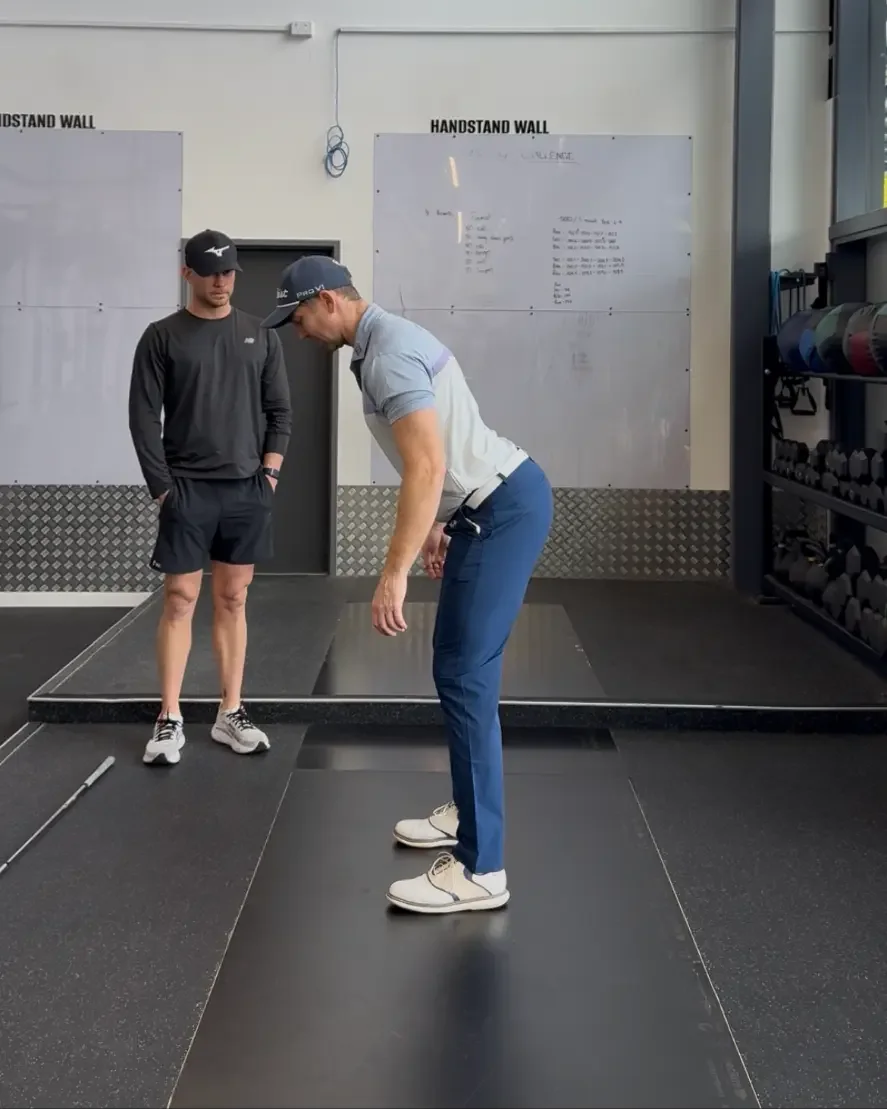
Pelvic Tilt Test
Assesses mobility of the hips and lumbar spine, and your ability to control pelvic posture. Moving and controlling the pelvis is important for power transfer from the lower body to the upper body.

Physical screening helps us understand why you move the way you move, and why you swing the way you swing. The TPI physical screen includes 15 screening tests across five areas.
A 15-minute introductory call to discuss your goals and next steps. This is separate from the physical assessment.
The aim is an efficient swing you can repeat and control, generating maximum power with the least effort. Your physical screening results and swing analysis are considered together to identify the body-swing connections and prioritise your training.
Assesses mobility of the hips and lumbar spine, and your ability to control pelvic posture. Moving and controlling the pelvis is important for power transfer from the lower body to the upper body.
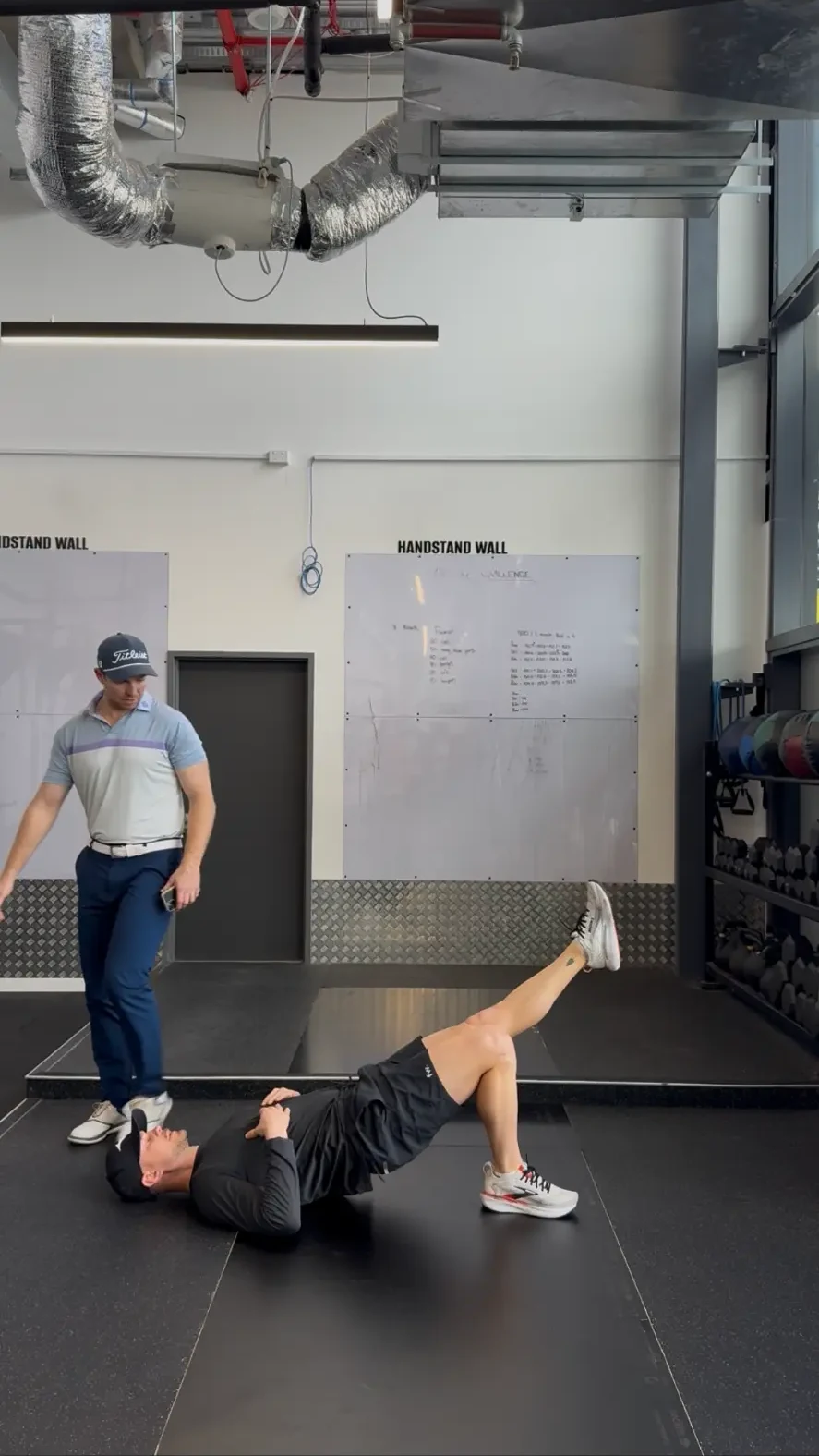
Assesses stability in the pelvis, lumbar spine and core, particularly the gluteal muscles. We look at whether the pelvis stays level, compare both sides and note hamstring or lower-back cramping.
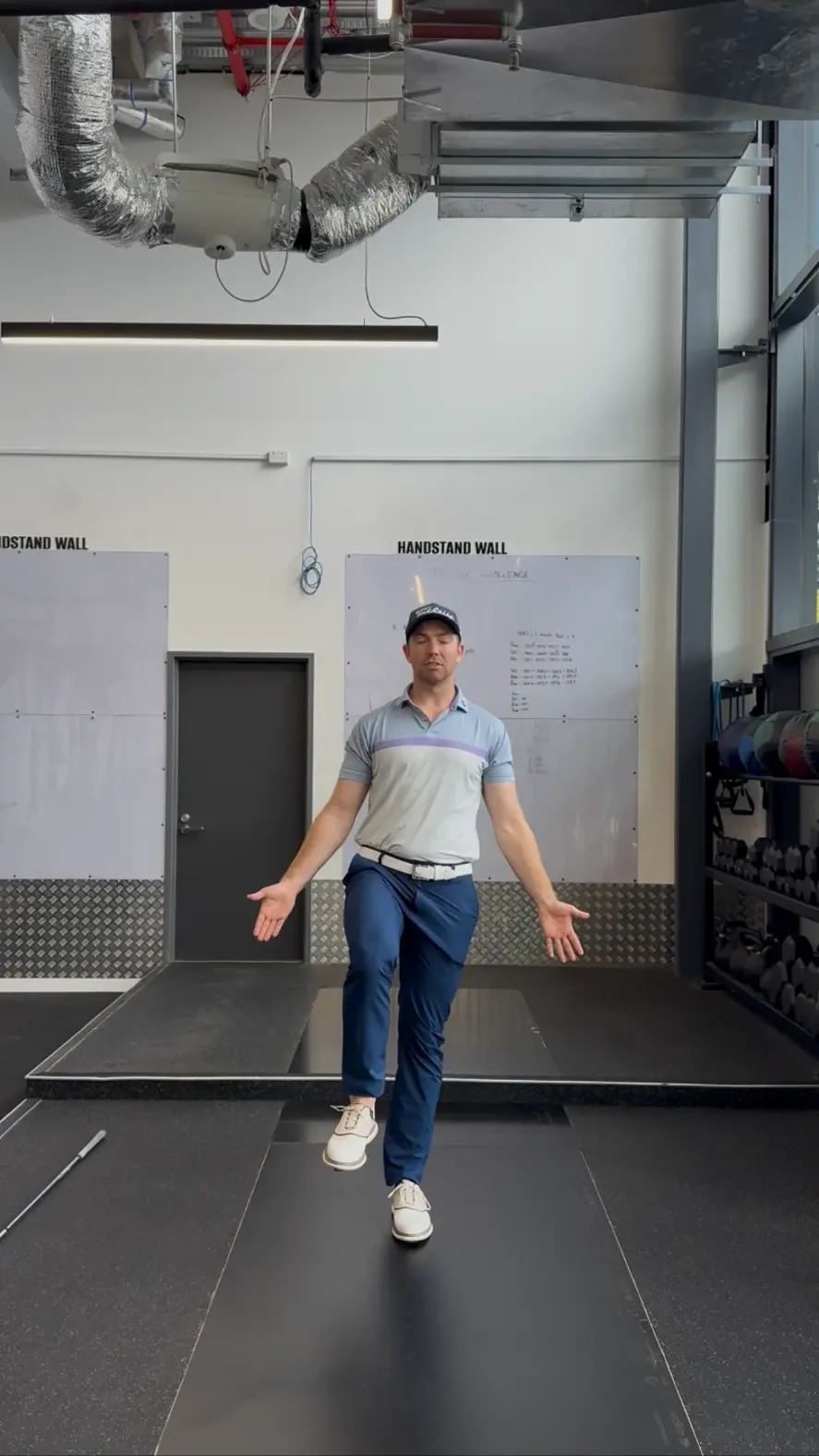
Measures overall balance, side-to-side differences and core stability. Balance is assessed on each leg with the eyes closed.
Checks your ability to rotate the lower body independently from the upper body. It requires mobility in the spine, hips and pelvis while the upper body remains stable, supporting separation and downswing sequencing.
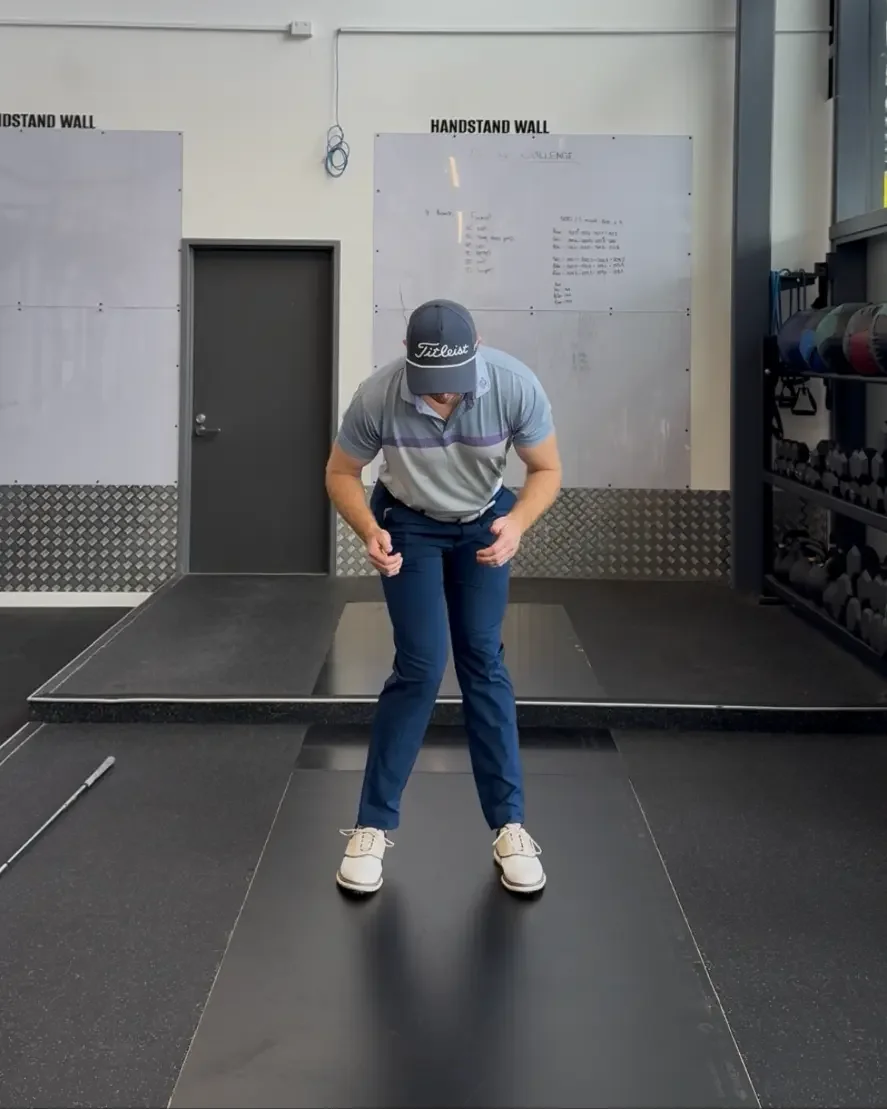
Measures rotational mobility of the lower quarter, including hip and tibial rotation and foot movement. These movements help you load the trail leg in the backswing and rotate into the lead leg in the downswing.
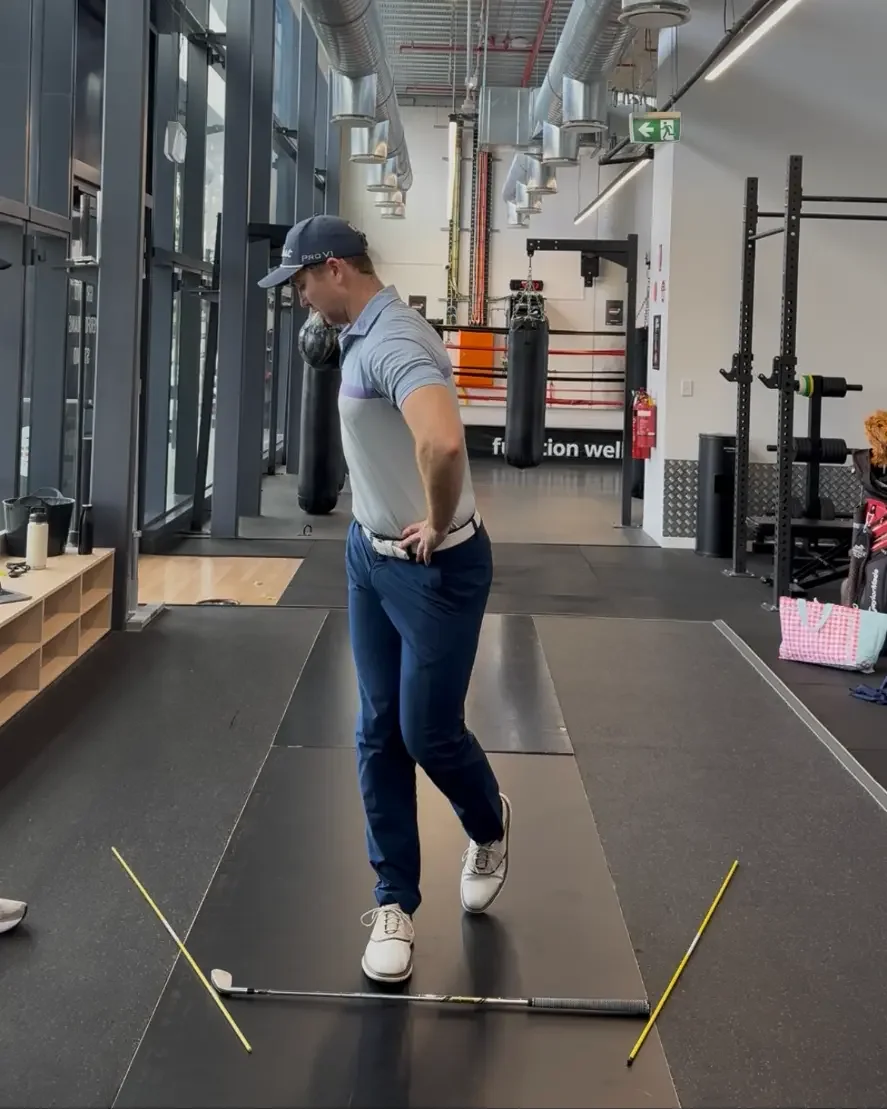
Assesses mobility in the lower back and hamstrings and the quality of your hip hinge or forward bend. Follow-up testing compares sides when the initial movement is limited.
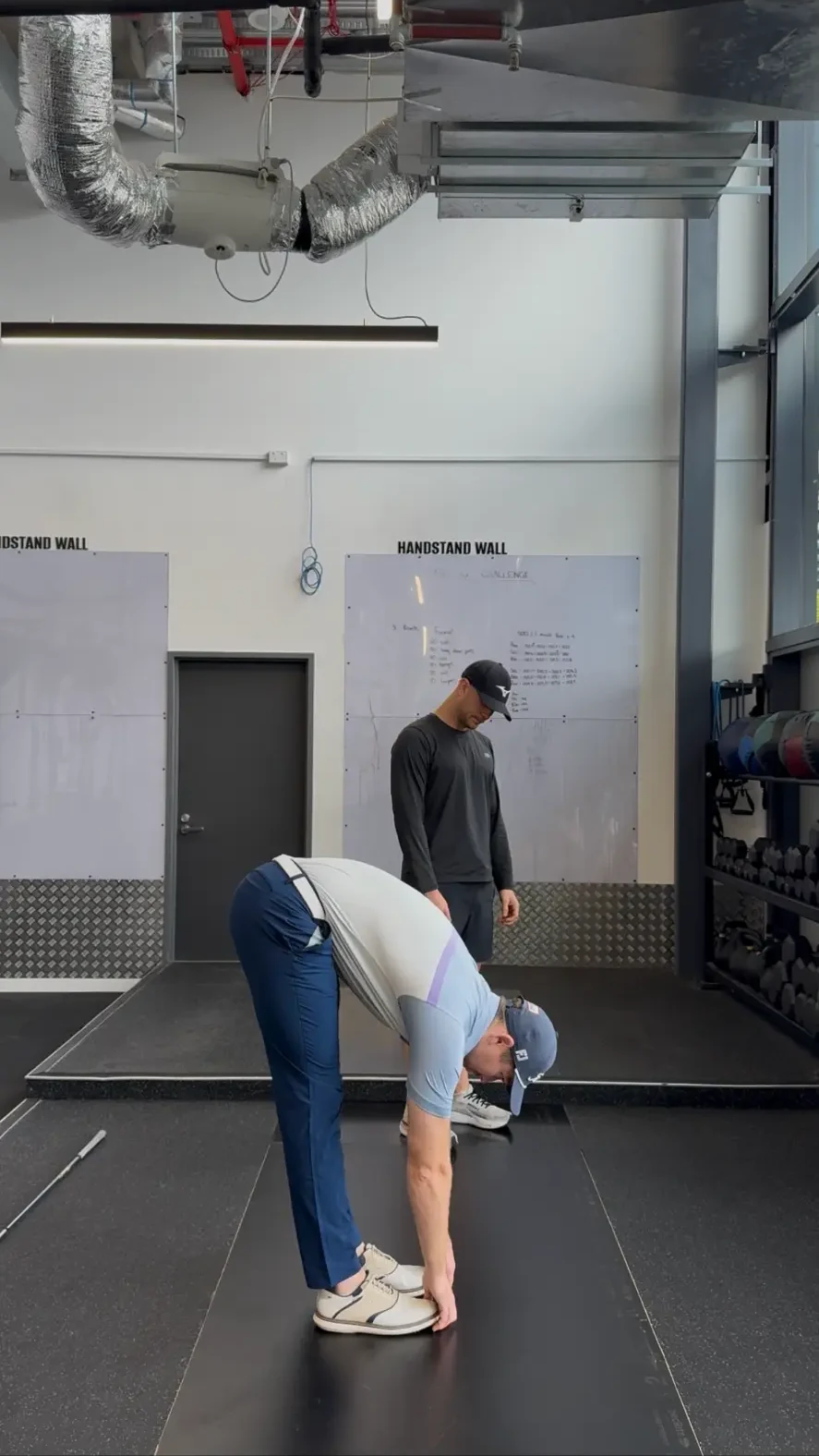
Checks your ability to rotate the upper body independently from the lower body. It requires thoracic spine mobility and lower-body stability, supporting separation and coil in the backswing.
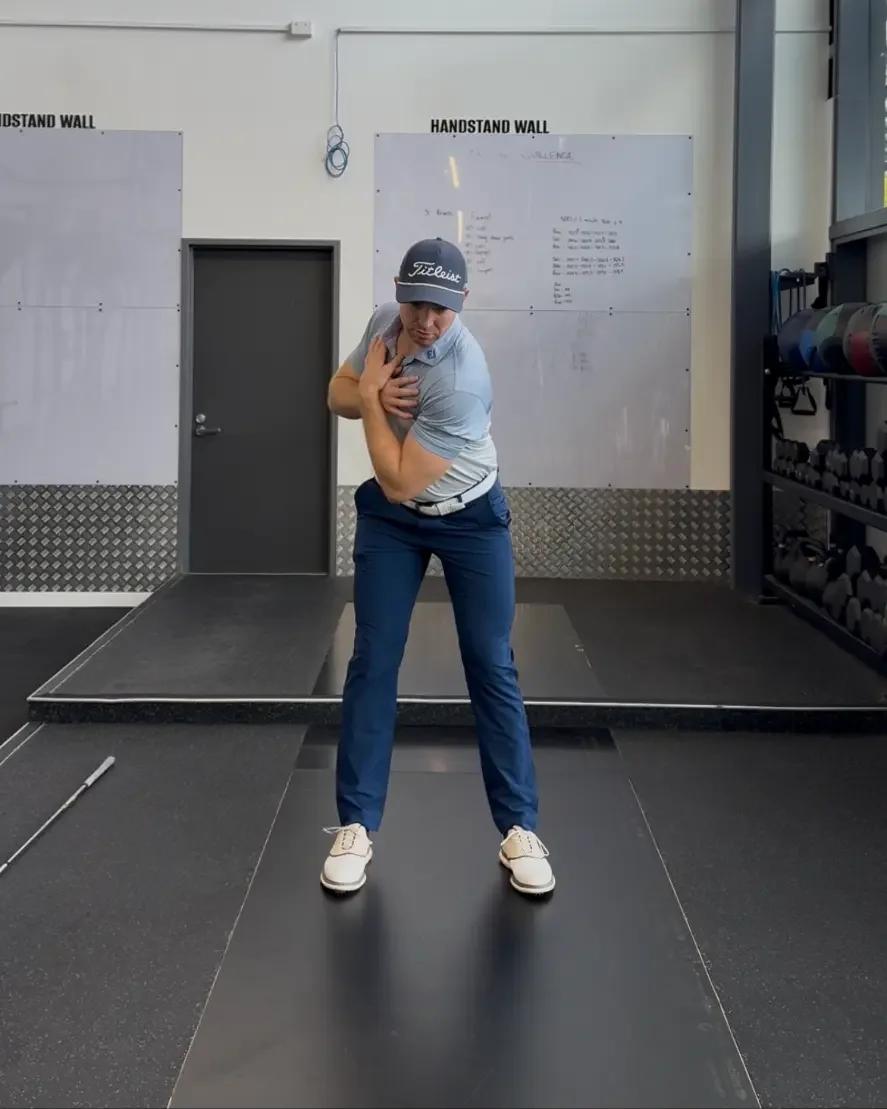
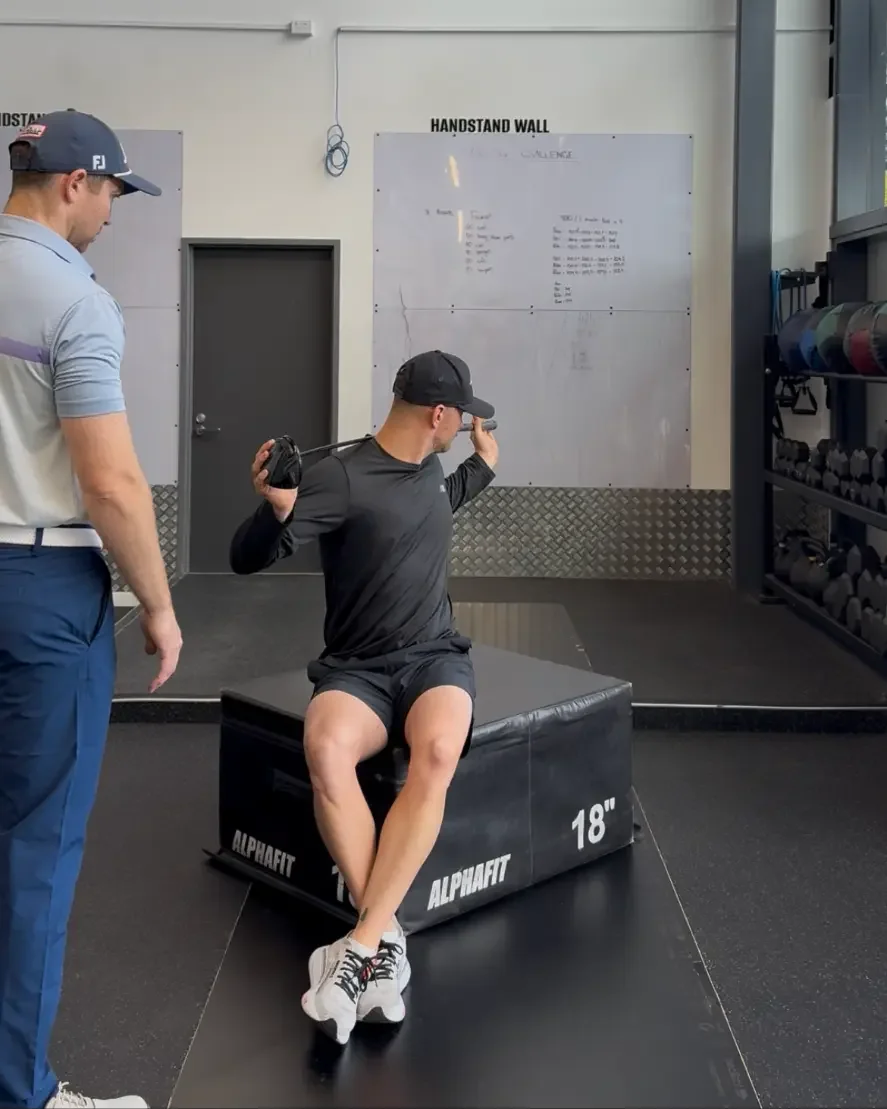
Assesses rotational mobility in the thoraco-lumbar spine while the knees and pelvis remain still. It helps distinguish true trunk rotation from shoulder-blade movement.
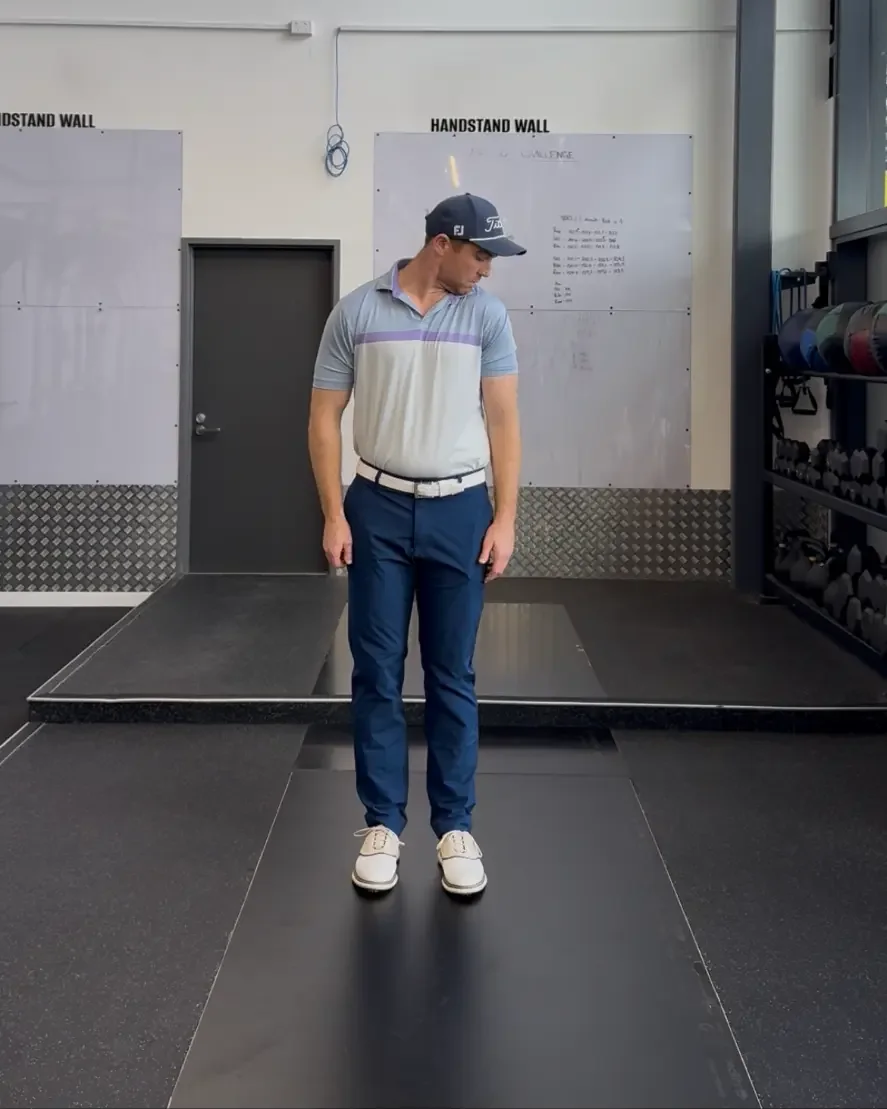
Evaluates available cervical spine rotation and lateral flexion through a combined neck rotation and side-bending movement.
Measures shoulder external rotation and your ability to maintain scapular stability in golf posture. We compare each shoulder's range while standing with its range in your golf posture.
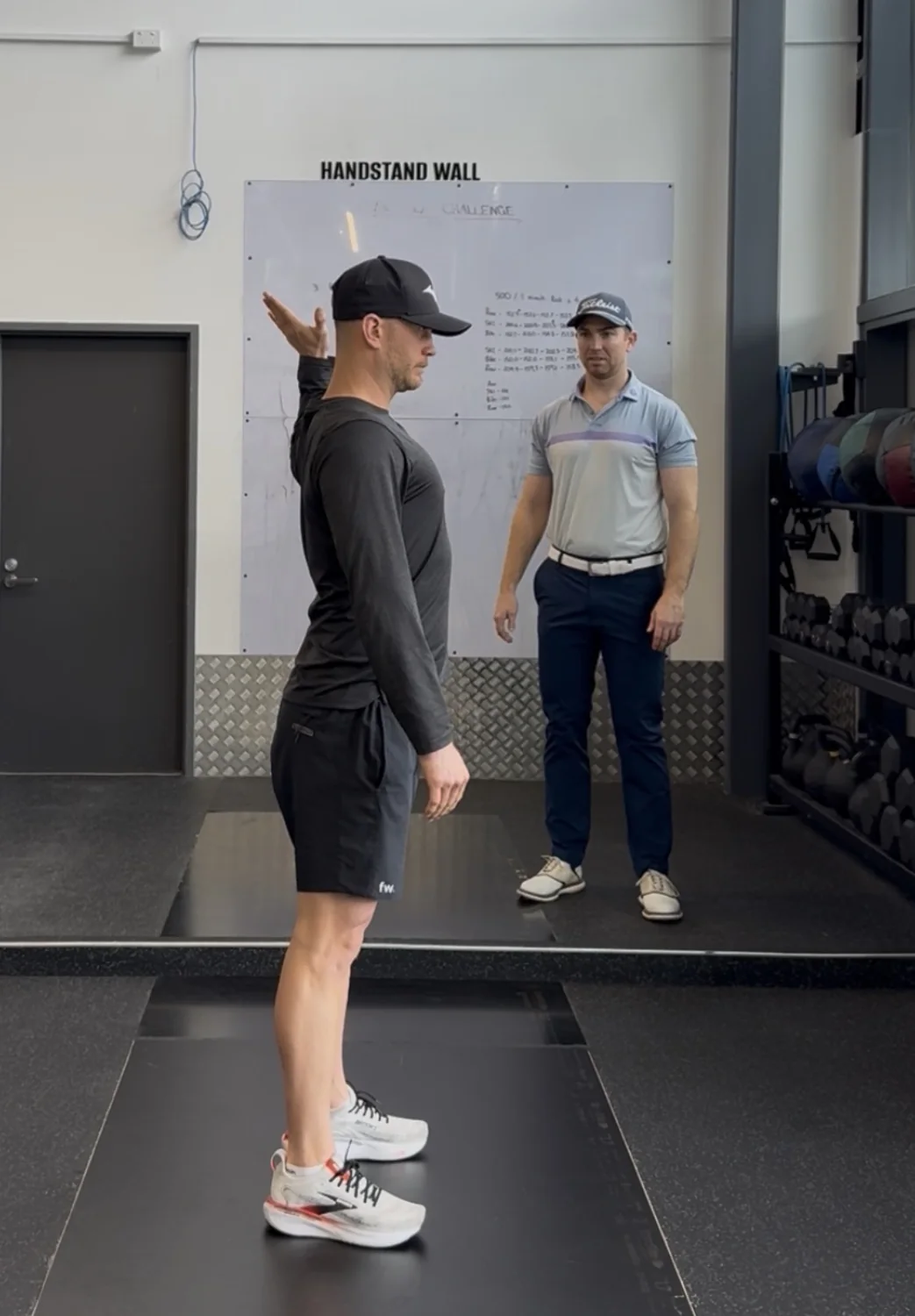
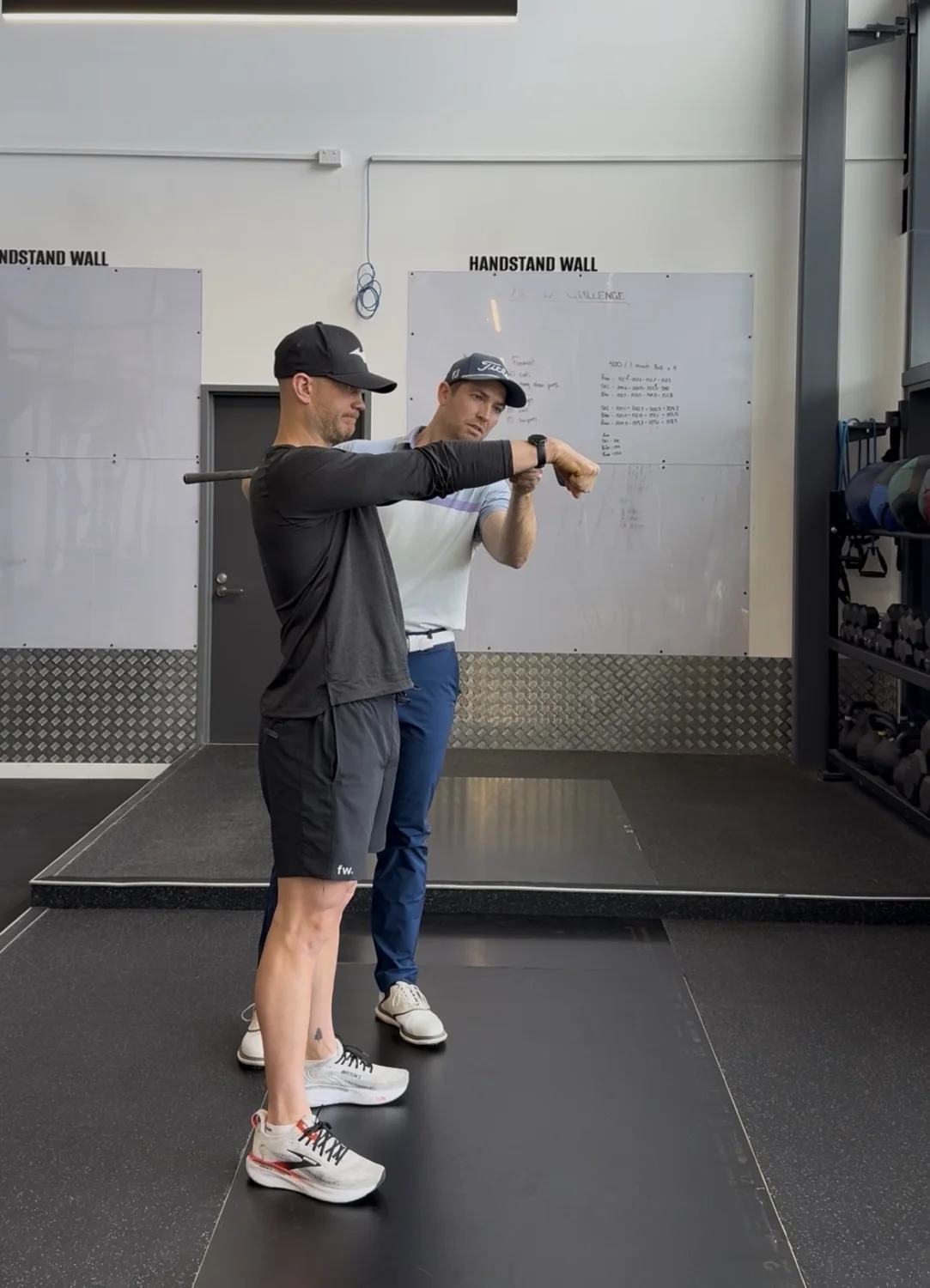
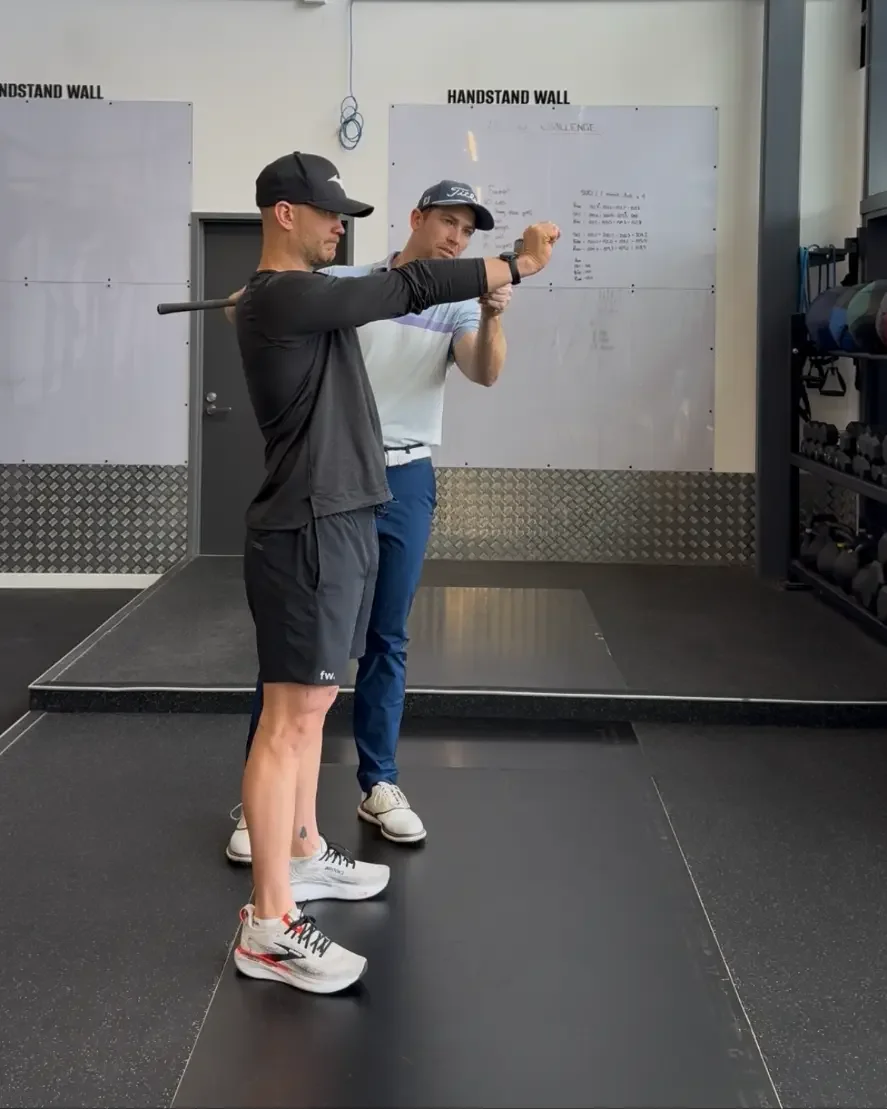
Evaluates shoulder flexion, including latissimus dorsi flexibility, shoulder joint restrictions and scapular motion. We look for compensations such as bent elbows or an arching lower back as the arms lift.
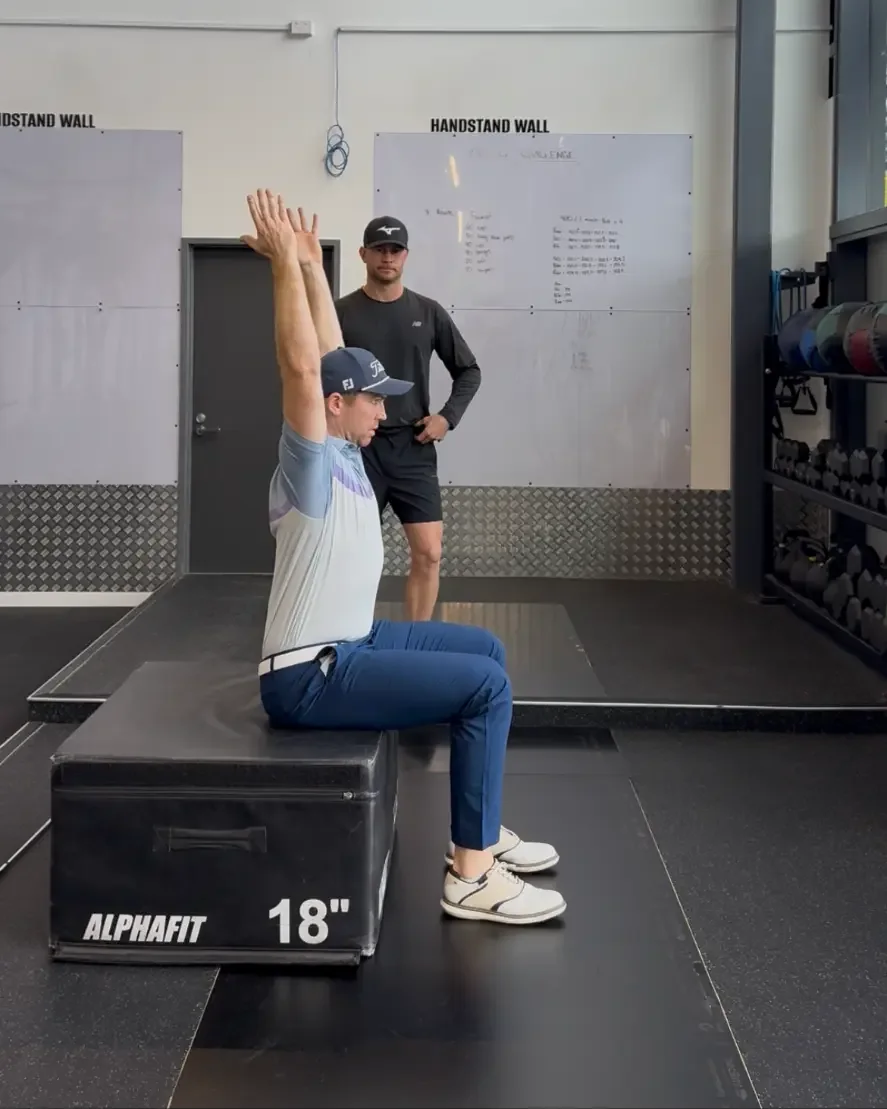
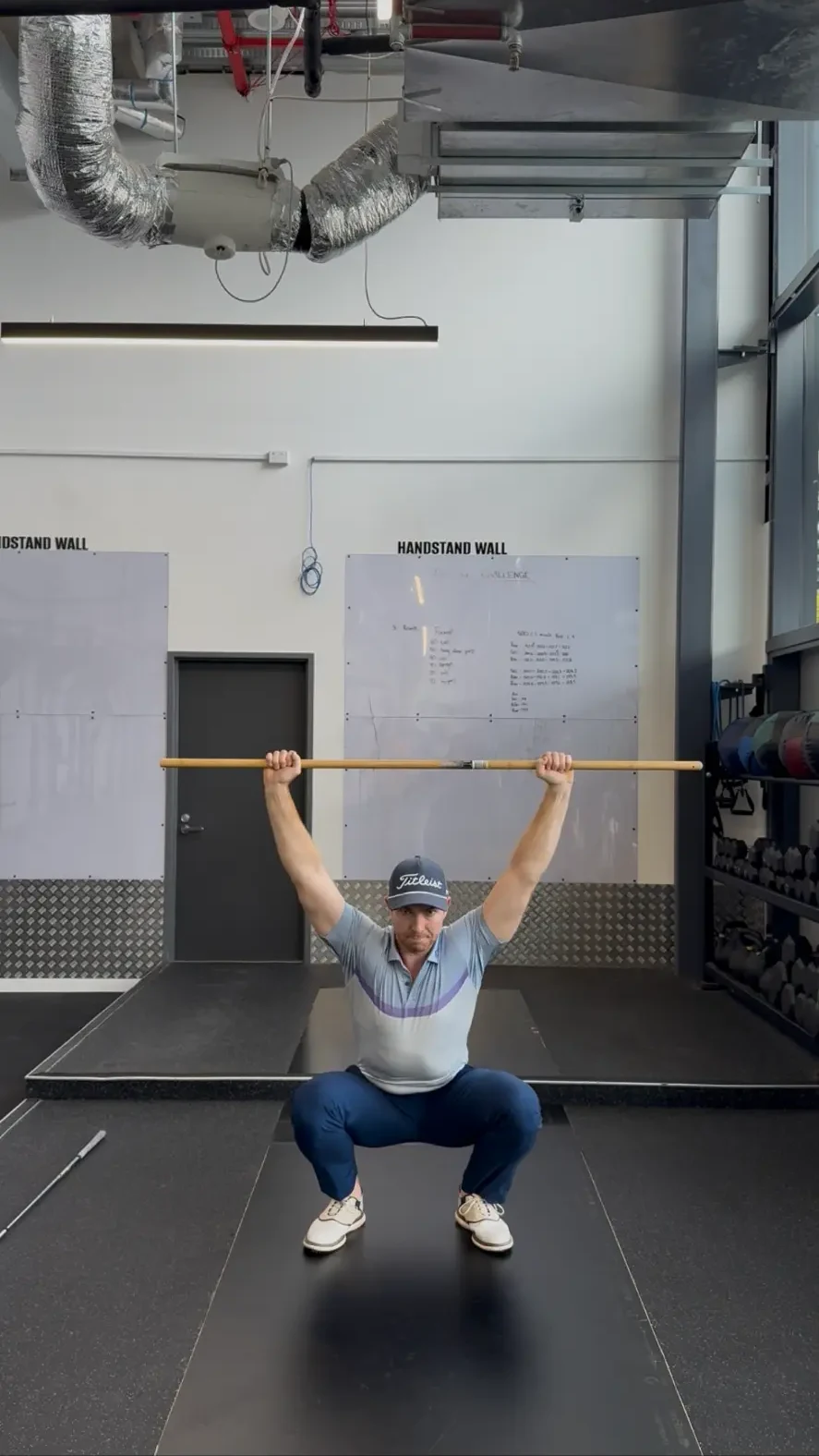
Assesses bilateral, symmetrical mobility of the hips, knees and ankles, together with shoulder and thoracic spine mobility when the club is held overhead. We also assess core stability and the ability to maintain posture.
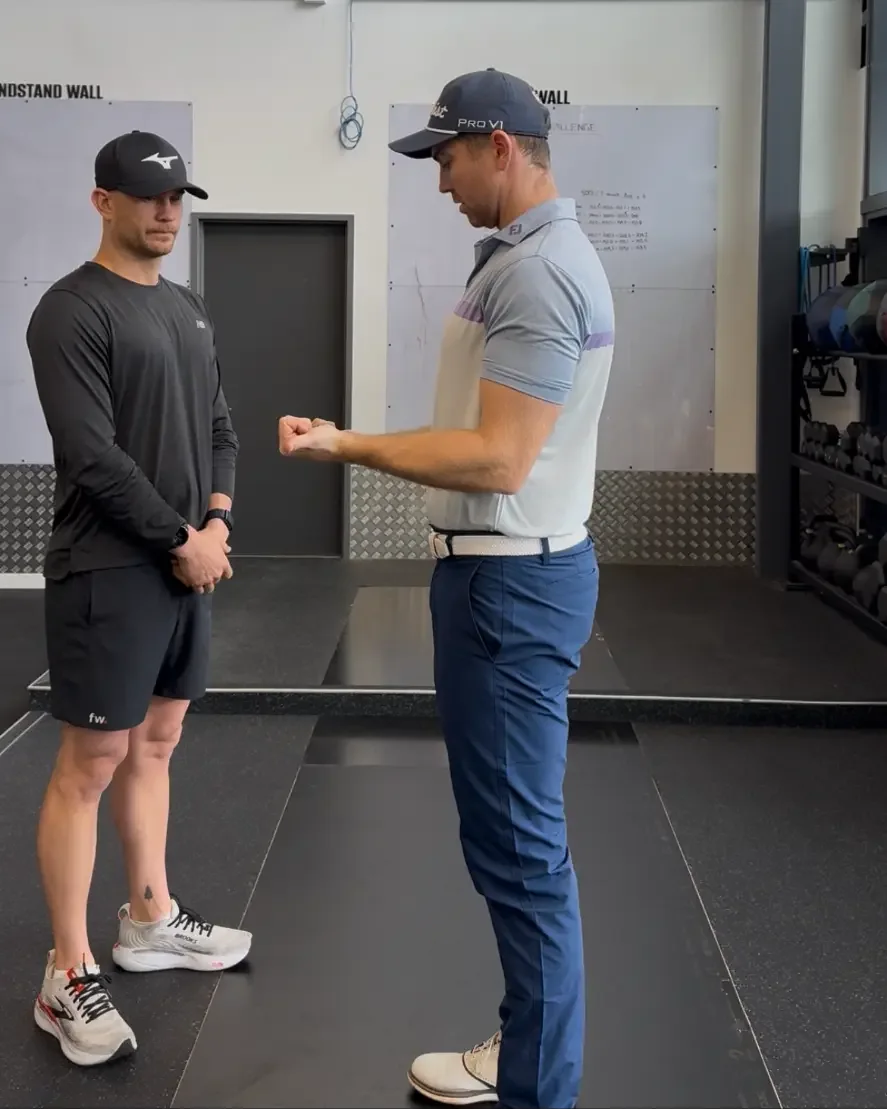
Assesses your ability to bend the wrists forward and backward, movements involved in the backswing and downswing.
Assesses radial and ulnar deviation of the wrists. Hinging up is important for setting the club; hinging down is important for releasing it through impact.
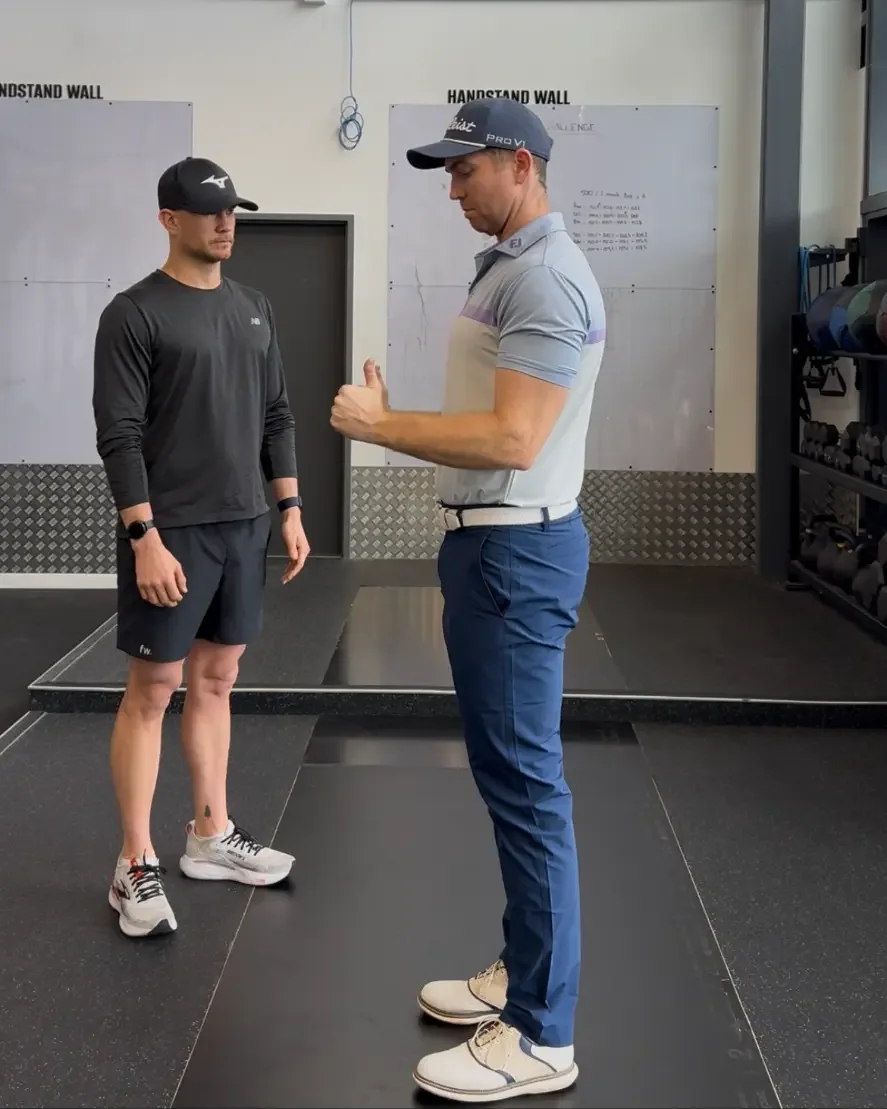
Assesses wrist and forearm rotation, movements involved in setting and releasing the club and producing power.
If a screening movement causes pain, we stop and discuss an appropriate health professional referral.
We bring the physical screening and swing analysis together, starting with the swing characteristics we want to address. We then look at the associated screens and the movements you found difficult to build your training priorities. The goal is to explain the connection between your physical work and your golf.
These are a few examples, not an exhaustive list.
The hips move towards the ball during the downswing, reducing the space available for the arms and club.
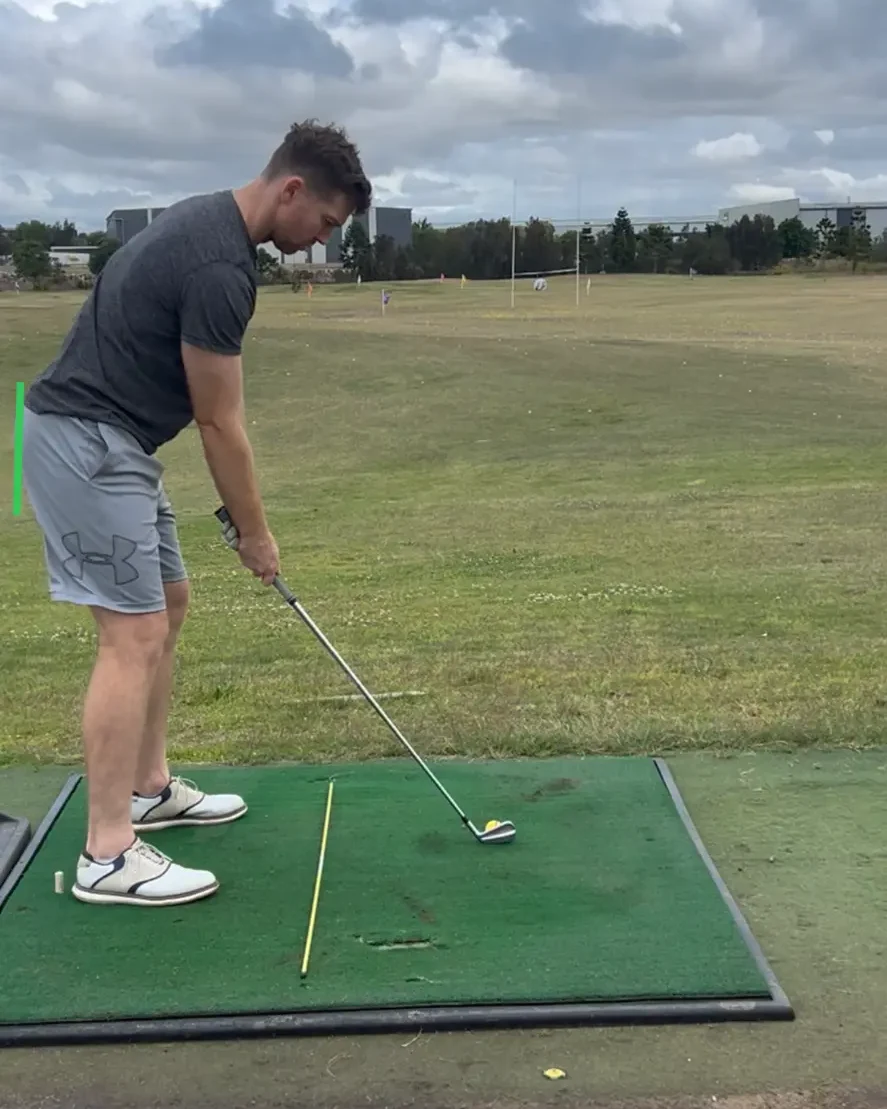
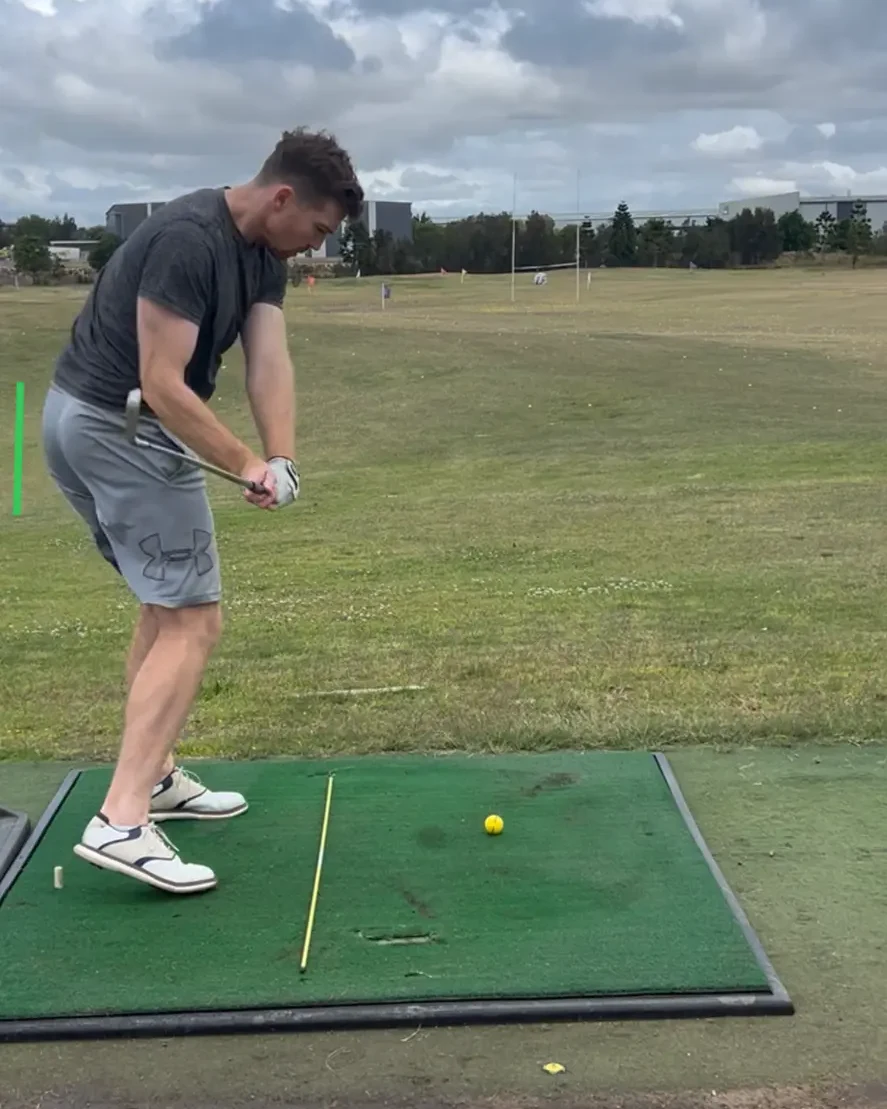
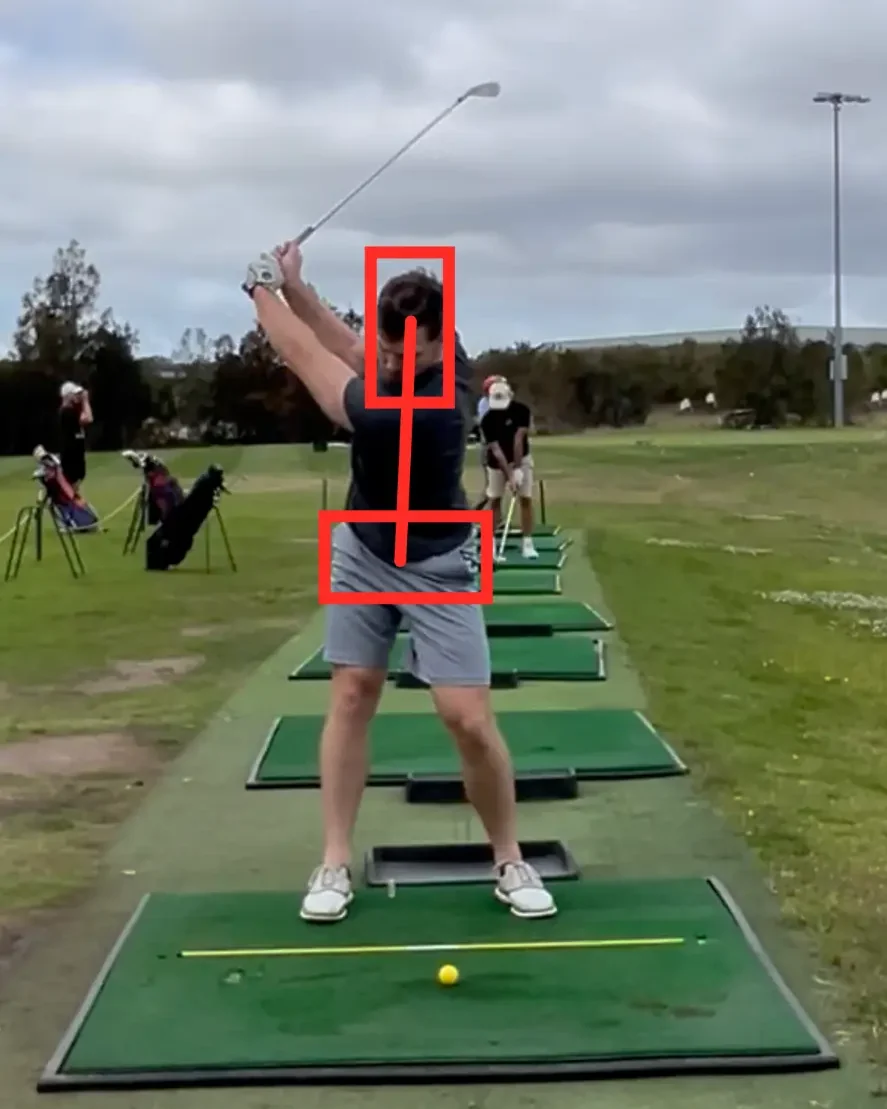
The upper body leans towards the target at the top of the backswing.
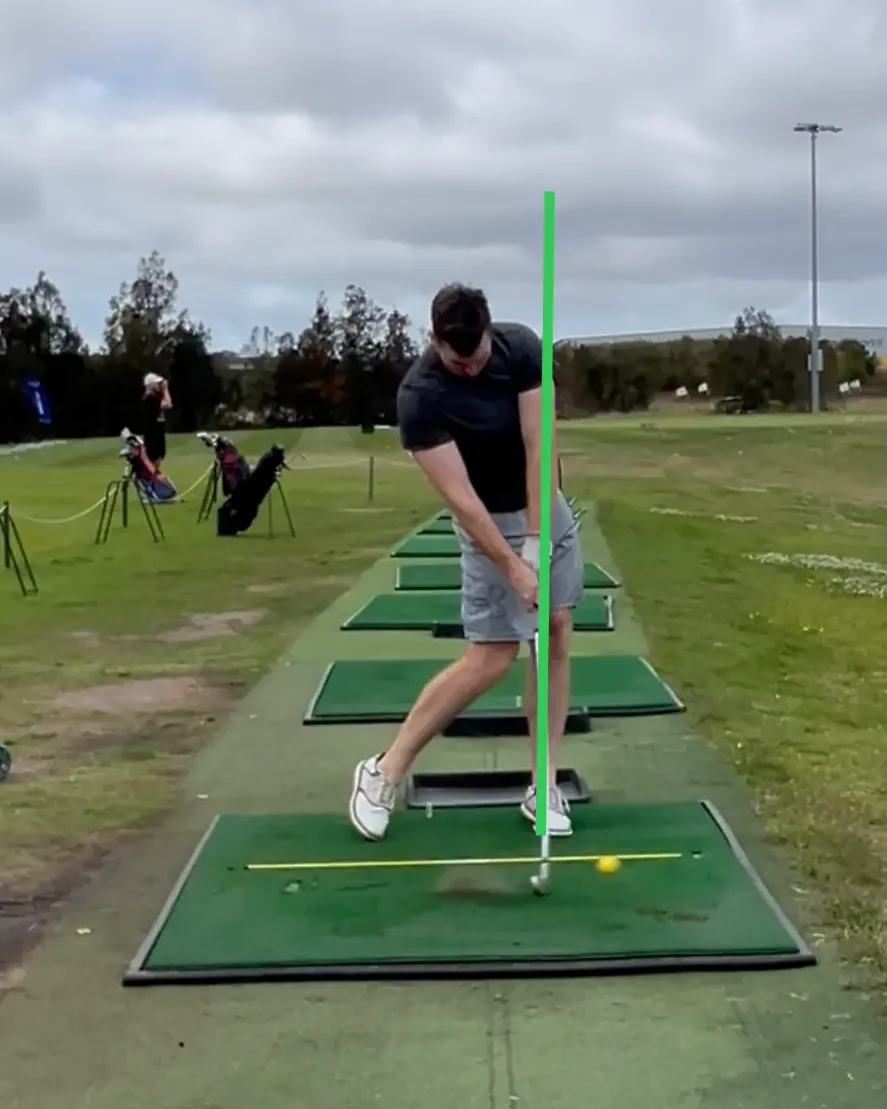
The lower body moves excessively towards the target during the downswing.
The kinematic sequence describes how the pelvis, thorax, arms and club build speed through the downswing. In an efficient sequence, peak rotational speeds occur in that order, with each segment peaking later and faster as speed builds towards the club. It is about timing and coordination, as well as strength.
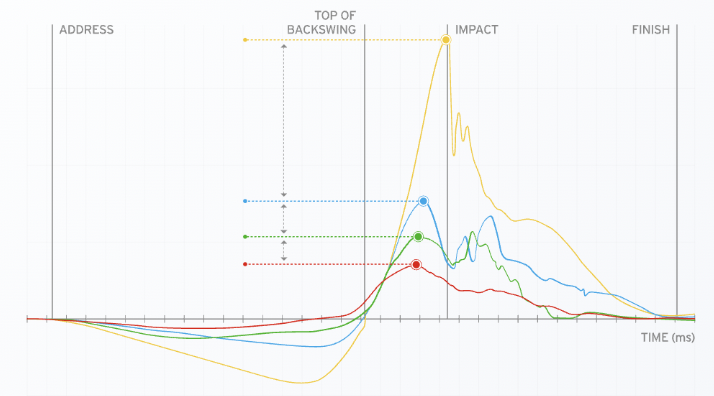
We bring your TPI screening and swing review together to identify movement and control priorities.
Start with how you move today, alongside your swing and what you want from your golf.
Use that starting point to choose movement and training priorities linked to your goals.
Return to the movements and your swing as training progresses, and adjust the priorities where needed.
For golfers 35+, with no upper age limit. Book a 15-minute introductory call to discuss your goals and next steps, separate from the physical assessment.